


Toyota C-HR on 20-Inch JR52 Wheels in Platinum Bronze
20/11/26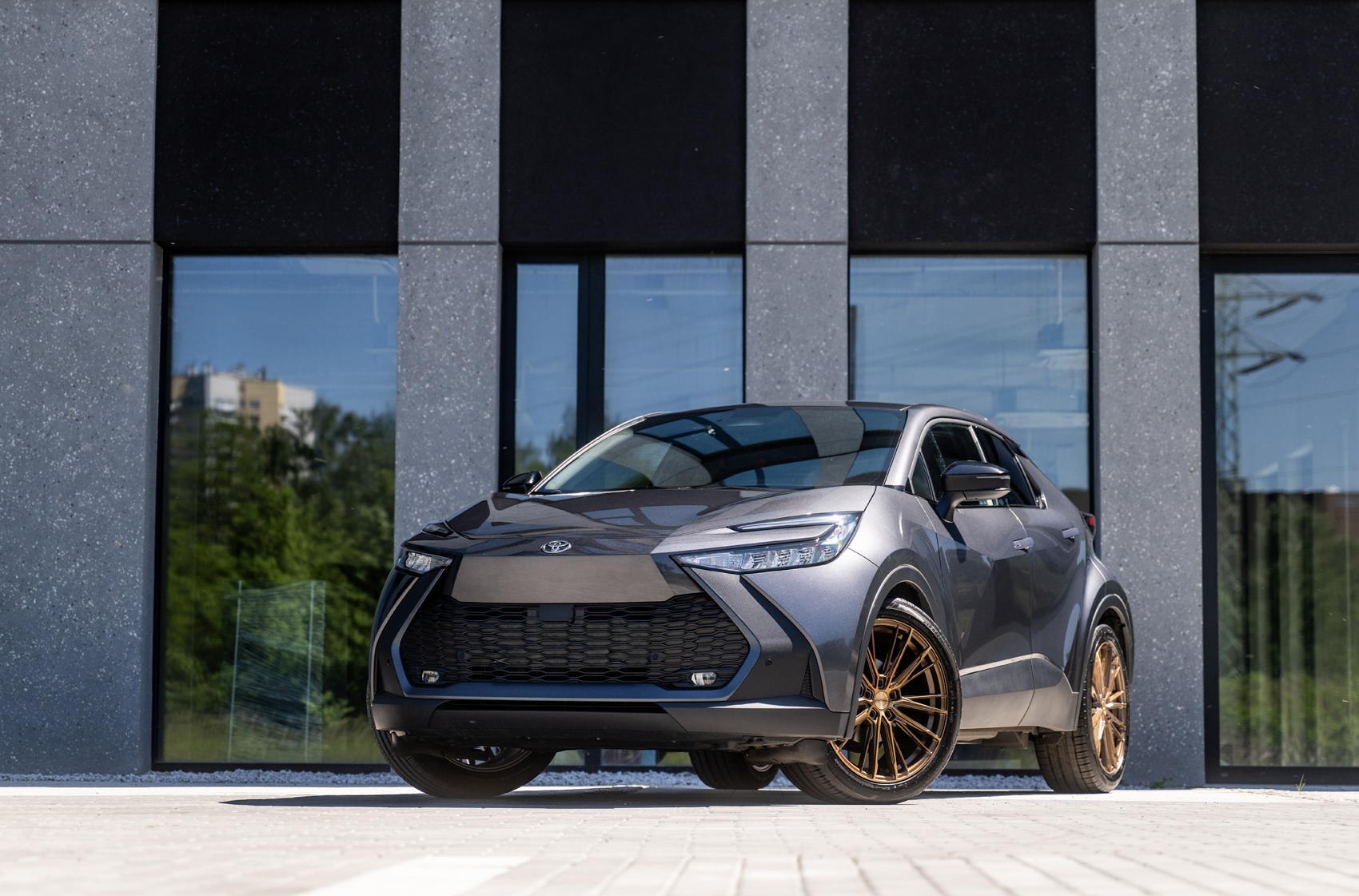
Parked in front of a glass and concrete façade, this Toyota C-HR already has plenty going on above the wheel arches. There is a low sweep to the roof, a pronounced shoulder over the rear wheel and a deep crease that changes the way light moves across the doors. The 20-inch JR Wheels JR52 bring a different kind of detail to the lower half of the car. Platinum Bronze stands out against the dark grey body, while the fine lines of the spokes echo some of the sharper edges in the sheet metal. In the widest frame, the bronze wheels are the first warm element to register. A closer look reveals how much of the build’s character comes from the relationship between the wheel face, the tyre and the shape of the arch around them.
JR Wheels records the setup in its vehicle gallery as 20×8.5 inches at the front and 20×8.5 inches at the rear. The two numbers describe the diameter and nominal width of each rim. Seeing the same dimensions listed at both ends adds context to the side profile, where the front and rear wheels carry a similar visual weight despite the very different shapes of the bodywork above them. The front wheel sits beneath a tightly drawn wing and a low headlamp. The rear has a fuller shoulder overhead, with the body projecting more strongly into the light. Using the same diameter, width and wheel design across both axles gives the eye a constant point of reference as it moves between those contrasting ends of the car.
The JR52 has a fine multi-spoke face. In the straight-on close-up, the spokes gather in pairs near the centre and fan apart as they reach the outer edge. That creates narrow and wide openings in an alternating rhythm, making the design easy to recognise without asking the finish to do all the work. The shapes are especially clear where a highlight lands along one side of a spoke and its opposite edge drops into shadow. Dark space behind the face gives those outlines definition. At normal viewing distance the pattern reads as a single, fairly even spread of bronze. At close range the spoke edges, the openings and the visible hardware around the centre each become distinct parts of the design. It is a wheel face that rewards both distances.
An angled view reveals the shallow-looking sweep from the outside of the wheel towards the hub. That visible concavity is one reason the JR52 photographs so differently from the side and from a low front angle. In profile, the outer circle and the spread of the spokes dominate. From closer to the ground, a few spokes catch enough sunlight to trace the face towards its centre, while others seem to disappear into darker sections of the wheel. There is also more depth to the opening around the brake hardware than a straight-on image suggests. The gallery is particularly good at showing the difference between the geometry of the design and what directional light does to it. Much of the drama comes from those two effects working together.
Platinum Bronze sits somewhere between the colour of warm metal and the darker brown that comes through in shadow. In the brighter rear three-quarter images, some of the spoke edges appear almost golden. In the shade beside the building, the same wheels look richer and deeper. The dark grey paint changes with the light too. The windows and parts of the doors pick up reflections from the sky and surroundings, introducing cooler shades that make the bronze easier to pick out. Those shifts are part of the appeal of coloured alloy wheels on a car like this. The finish feels composed in the wide architectural photographs and far more expressive in the close-ups, where the light can isolate a handful of spokes and bring their shape into focus.
At the front, the C-HR has several tight lines converging around the headlamp and the bumper. The lamp tapers towards the side, while the dark opening in the lower fascia takes up a substantial part of the nose. A front three-quarter view puts the near-side JR52 just beyond those shapes, with its bronze face clearly visible against the black arch trim. The front wheel supplies an orderly radial pattern alongside body lines that run diagonally and horizontally. It also gives the photograph a point of focus below the headlamp, balancing a nose that could otherwise dominate the whole composition. From low down, the outer edge of the rim appears particularly crisp against the tyre, almost like a fine line drawn around a much more intricate design.
The rear is where the combination feels most relaxed. The silhouette slopes towards a short tail, with the rear spoiler and the thin red lighting drawing a strong line across the upper part of the image. Below that, the rear wheel has room to sit comfortably within a sizeable arch and beneath a substantial piece of sculpted bodywork. In the sunlit photographs, it offers a second focal point well away from the rear lights. There is a satisfying distance between the two. The red runs horizontally across the car and the bronze gathers low down in a circle. With the dark tailgate and bumper between them, both colours can make an impression without crowding the rear view.
The straight side view is the best frame for judging the relationship between the 20-inch wheels and the overall size of the Toyota. It draws attention to the space between the wheels, the high, shaped doors and the way the roof tapers towards the back. Here, the arches frame two nearly identical patches of colour and detail. That repeated pattern settles the composition, especially when the car is shown at a distance and individual spokes become harder to distinguish. The slim-looking band of tyre around the rim helps keep the wheel diameter visually prominent. Side-on, the C-HR still reads as a compact crossover with a noticeably sculpted profile. The large wheel faces add emphasis at either end of that profile and bring more attention down towards the road.
The wheel close-up offers a slower look at what makes the finish work. The outer rim describes a clean circle, and the spoke ends meet it at short intervals. Around the centre cap, the bronze gives way to a series of shadows around the openings for the fasteners. The gaps between the spokes reveal enough of the wheel interior to give the design a layered appearance. It is easy to see how the same set of aftermarket wheels can look delicate in a detail shot and substantial in a full-car photograph. In the former, the eye follows the edges of the spokes and the little changes in colour along them. In the latter, the entire face becomes one deliberate warm accent below a much cooler expanse of bodywork.
A vertical photograph framed by greenery changes the mood again. The front wheel and wing sit just beyond blurred plants, with a patch of clear sky above. The bronze looks warmer in that setting than it does beside the darker glass façade. The composition gives more attention to the curve of the arch, the width of the black trim and the bright outer edge of the wheel. It also shows the combination in surroundings that feel closer to an ordinary stop on an afternoon drive. The wheel is still the centre of attention, though the plants and the daylight take some of the formality out of the image. That versatility makes the finish feel at home in both the carefully framed photographs and the more casual visual setting.
The catalogue lists the cast JR52 in 18-, 19- and 20-inch diameters. It also lists Gloss Black and Titanium Machined Face alongside Platinum Bronze as standard finishes. The 20-inch setup in this gallery gives particular prominence to the long spokes and the circle they form around the face. Diameter has consequences for the way any wheel and tyre combination reads against a body. Depending on the choice of tyre, a smaller wheel can give the sidewall more visual space. A larger wheel tends to draw attention to the rim face. Here, the 20-inch diameter takes full advantage of a design with fine lines and plenty of detail near the perimeter, where the transition to the black tyre is easy to see.
There is another side to fitment beyond the visual impression. The gallery gives a clear example of a 20×8.5-inch setup, and those dimensions establish a starting point for understanding its proportions. Offset affects where a wheel sits relative to the hub and the arch. The bolt pattern and centre bore describe other parts of the interface, while tyre dimensions and clearances have to be considered for the specific vehicle and wheel specification. That distinction matters with wheels for the Toyota C-HR because an appealing photograph can answer questions about style long before it can answer every question about fit. The space visible above the tyre, the perspective of the photograph and the apparent depth of the spoke face each say something different about the way this particular car presents.
As a daily-inspired build, the Toyota is particularly convincing in the wide photographs. The wheel finish has personality, and the car’s overall shape remains familiar enough to imagine passing it on a city street or seeing it parked beside neighbours at the end of the day. There is a connection to the OEM+ approach here, especially in the way the same wheel design and sizing create a visual link between the two axles. The arch trim continues to frame the tyres and the body lines remain easy to read. Platinum Bronze pushes that approach in a more expressive direction. In daylight the setup feels carefully considered, with enough colour to distinguish the car and enough restraint in the surrounding palette to make the choice look intentional.
The sportier side of the build emerges where the camera gets closer to the ground. Thin highlights on the spokes, a dark grille and sharp lines around the front bumper give the C-HR a particularly focused expression. The way the front wheel fills its part of the image makes the car look ready to move, even though the photographs are static. At the rear, the same effect comes from the direction of the shoulder line and the slight upward angle of the camera. This is where the JR52 works as a sporty wheel design. Its radial pattern pulls the eye outwards from the hub, towards the edge of the tyre and then along the body. The sense of motion is a product of the composition and the forms within it.
From a stance perspective, the strongest detail is the continuity from front to rear. The shape above each arch differs and the light never strikes two wheels at exactly the same angle, so the two ends are naturally going to look a little different. A repeated diameter and a repeated width help tie them together. The dark tyres and arch surrounds create an uninterrupted frame for the bronze faces in the side views. In the rear angles, the near wheel naturally appears larger because it sits closer to the camera. Moving back to the profile restores the balance and makes it easier to appreciate the even rhythm of the setup. The sequence of angles is what makes the gallery a useful reference for judging the appearance of this fitment.
There is enough detail here for a show-car presentation as well. In a static display, people tend to move around the car and spend more time with individual parts of the build. The JR52 has details that only come forward at those closer distances, particularly near the centre of the face and where the spoke edges catch the light. The architecture in the gallery also suggests a simple setting for presenting coloured wheels. Repeated windows and vertical concrete sections give the background structure, leaving the bodywork and the bronze with room to introduce less regular shapes. A display at a meet would have a different atmosphere, but the same combination of grey paint, black trim and warm wheels would give the car a recognisable identity from just about any angle.
The photographs are also a reminder that a wheel finish is seen in relation to much more than the paint code. The roof, the glass and the black around the arches all influence how the bronze reads. When the side glass reflects blue sky, the wheels appear noticeably warmer. When more of the pale paving enters the frame, the outer edges of the rims pick up brighter highlights. The red rear lamps create another relationship, placing two warm colours far apart in the same composition. Thinking about the entire palette explains why a finish with this much presence can look integrated on the Toyota. There are several places for the eye to go, and the bronze gives it a reason to return to the lower half of the car.
The lasting image is the wide rear three-quarter view with the Toyota small against the building. The roofline and sculpted shoulder give the C-HR its shape. The dark surfaces catch the reflections of windows, sky and pavement. Between the body and the ground, the two bronze wheels mark the car’s footprint with unusual clarity. From that distance, the intricate JR52 face has almost dissolved into colour. The closer frames recover every line, opening and small shadow in the design. That movement from the whole car to a single wheel is what makes the combination worth a closer look. On this Toyota C-HR, the 20-inch JR52 in Platinum Bronze are just as effective as a pair of warm circles in a wide photograph as they are under the scrutiny of a tight close-up.
GALLERY


