


Tesla Model 3 Performance on JR50
26/10/26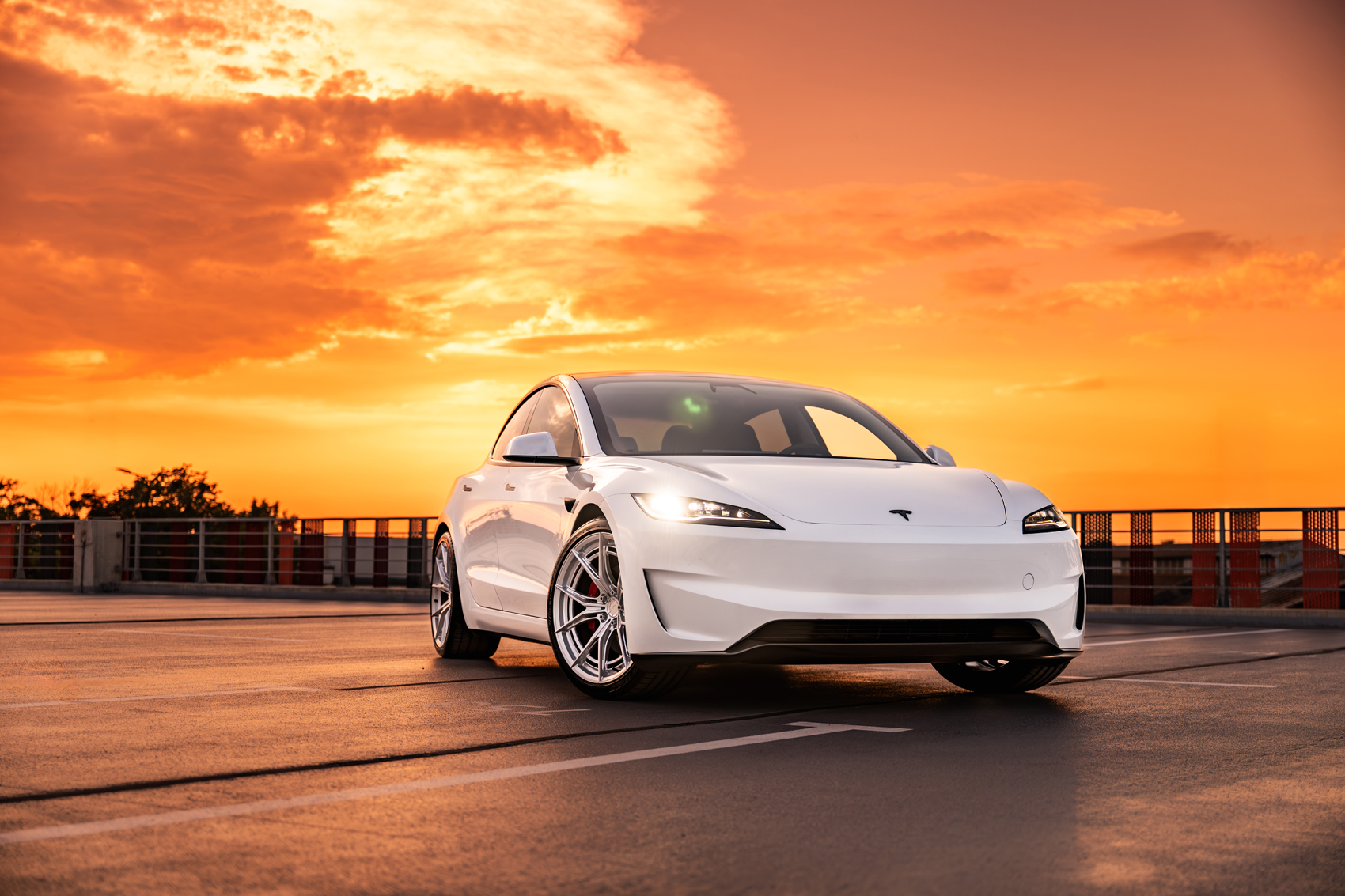
There is a particular moment when an otherwise familiar car becomes something worth stopping for. The shape remains recognisable, the proportions still belong to the original design, yet a few carefully chosen details change its entire presence. This Tesla Model 3 Performance on JR Wheels JR50 captures that moment against an orange evening sky. White bodywork, dark glazing and bright silver wheels create a composition with very little visual clutter. The result feels deliberate and complete: a modern saloon with an individual identity, expressed through the relationship between its body, its wheels and the light moving across both.
The configuration recorded in the JR Wheels gallery pairs JR50 alloy wheels in Hyper Silver with a staggered setup: 20x9.5 at the front and 20x10.5 at the rear. Both axles share the same diameter, while the rear wheels gain an additional inch of width. Those specifications establish the foundation of the build, but the photographs explain its appeal more immediately. The wheel design brings detail into the lower half of the car, giving the smooth bodywork a more intricate counterpart. The Tesla remains visually clean, with the JR50 providing the sharper, more expressive element.
The front three-quarter photograph makes that relationship especially clear. Across the bonnet and front bumper, broad white surfaces lead towards narrow headlights and dark lower trim. Below the front wing, the JR50 introduces a much denser arrangement of lines. Its slender, branching spokes create angular openings around the centre, adding a technical rhythm beneath the body’s softer contours. The difference in detail is what gives the pairing its energy. Rather than allowing the eye to pass over one continuous white shape, the wheel creates a focal point that draws attention downwards and anchors the front corner of the car.
Hyper Silver is central to that effect. In the photographs, the finish remains bright enough for the individual spokes to be read against the dark spaces behind them. Light traces their edges, while shadows separate the surfaces and reveal changes in direction. There is a sense of depth within the wheel face, particularly where the spokes approach the centre. The appearance shifts across the visible wheel as some sections catch the evening light and others fall into shade. This gives the JR50 a layered character, with a clear outline from a distance and smaller details that become apparent closer to the car.
White and silver can produce a very restrained combination, yet this Tesla avoids looking visually flat. The distinction comes from texture and geometry. The paint presents large, uninterrupted areas; the wheels break their surfaces into a sequence of narrow highlights and darker recesses. Black tyres frame the silver, creating a clean boundary between the wheel face and the surrounding bodywork. Dark windows and lower bumper details add further definition elsewhere on the vehicle. Each colour has a role, and the limited palette allows the form of the custom wheels to remain prominent without making the whole composition feel crowded.
The red brake caliper visible behind the front wheel adds another layer to the photograph. Seen through the open spoke arrangement, it provides a concentrated accent within the silver and black circle. Its presence also makes the spaces between the spokes part of the overall design. The wheel is experienced as a structure with something visible behind it, rather than as a solid decorative surface. Against the white front wing, that small area of red becomes particularly effective. It gives the front corner a sportier visual emphasis while leaving the broader colour scheme calm and controlled.
A 20-inch diameter suits the visual ambition of this particular configuration. In the gallery photographs, the wheels occupy a substantial part of the arches and give the lower body a defined, purposeful appearance. The silver design extends towards the outer circumference, which helps the spoke pattern remain legible across the full face. At the same time, the surrounding tyre provides a dark outline that separates the wheel from the white paint. The impression is of a complete assembly, with diameter, design and colour contributing together. These are aftermarket wheels that participate in the shape of the car rather than appearing as an isolated addition.
Width brings a different dimension to the composition. With 9.5 inches at the front and 10.5 inches at the rear, this staggered arrangement introduces a distinction between the two axles that becomes particularly relevant from an oblique viewpoint. In the rear three-quarter image, the near rear wheel carries considerable visual presence beneath the quarter panel. Its relationship with the body gives the back of the Tesla a planted appearance. The photograph communicates this through perspective, visible tyre and the position of the wheel within the arch, creating an impression of substance without requiring an exaggerated styling treatment elsewhere.
Fitment is ultimately a relationship between several elements, and the appeal here lies in how naturally those elements read together. The arch frames the wheel, the tyre establishes its boundary, and the spoke face supplies the detail. In these photographs, none of those parts overwhelms the others. The Tesla’s body remains the main silhouette, while the JR50 strengthens its lower outline. There is enough visual tension to give the car a modified character, yet the overall impression remains composed. It is an approach to wheels for the Model 3 Performance that values proportion as much as the immediate impact of a distinctive design.
The wheel face itself rewards a second look. The spokes are slender, but their branching layout gives the pattern a sense of structure and complexity. Around the outer area, angular sections create a repeated rhythm that contrasts with the circular rim. Towards the middle, the design gathers around the centre cap and mounting area. From the photographed angle, the movement between the outer face and the centre contributes to a concave appearance. That visible depth adds interest to the silver finish, allowing the wheel to be understood as a three-dimensional object rather than a graphic placed inside an arch.
This is particularly effective on a car with so few competing exterior details. The Model 3’s clean side surfaces leave space for the wheel design to establish its own rhythm. Along the visible flank, the eye moves between dark glazing, white panels and the two bright circles below. The JR50 gives those lower points enough detail to hold attention. Its angular character also introduces a different scale of design: where the body is read through long lines and broad curves, the wheel is read through smaller junctions, edges and openings. Together, the two create a more engaging visual experience.
The rooftop setting reinforces that experience. Painted parking lines, an open deck and a horizontal railing provide an orderly background for the car. Beyond them, trees form a dark edge beneath the intensely coloured sky. The location gives the Tesla room within the frame, so its outline and wheel placement can be appreciated without surrounding traffic or street furniture interrupting the view. It is a fitting environment for an automotive portrait built around proportion. The scene feels urban, yet there is enough open space and evening colour to give the photographs a quieter, more reflective atmosphere.
In the closer front view, warm light appears across the glass and bodywork while the wheel holds a mixture of bright silver and darker metallic tones. That variation gives Hyper Silver much of its photographic appeal. The finish does not need to appear identical across every surface to remain coherent; differences in illumination help describe the spoke shape. A brighter edge can reveal a narrow section, while a shadowed area gives a branching junction greater definition. The wheel becomes part of the lighting composition, carrying smaller reflections beneath the much broader ones visible on the bonnet and windscreen.
The rear photograph tells a different part of the story. Here, the descending roofline, rear glass and boot create a smooth sequence towards the back of the car. A dark lip at the edge of the boot and black lower bumper detailing give the white body a defined finish. The rear JR50 sits beneath that composition as a bright, intricate element. The wider rear specification belongs naturally within this view, where the visible wheel and tyre help establish the car’s stance. Silver introduces enough detail to balance the broad rear panels without distracting from their overall shape.
This is where an OEM+ interpretation begins to make sense. The car retains a clear connection to its original design language, while the wheels create a more individual and more enthusiast-oriented appearance. The modification is obvious, but it does not require a collection of competing colours or decorative additions to be effective. The JR50 provides a concentrated change with consequences across the whole silhouette. In visual terms, the Tesla looks more considered at ground level, with the wheel design giving its clean bodywork a stronger foundation and a more distinctive identity in the photographs.
There is also a connection to the wider culture of performance wheels, expressed here through appearance. Open spokes, visible brake hardware and a substantial wheel diameter bring familiar sporting cues into the composition. On this Tesla, those cues are presented within a particularly simple exterior. The result is an interesting balance between a contemporary electric-car shape and a more traditional enthusiasm for wheel design. The photographs do not need to show the vehicle moving to communicate that relationship. The way the wheels sit beneath the body already gives the stationary car an alert, purposeful character.
As a design, the JR50 also has room to be appreciated outside this exact configuration. JR Wheels lists the model in 18-, 19- and 20-inch diameters, and its product specifications identify the manufacturing method as FlowForm. The featured Tesla uses the largest of those listed diameters. Here, the technical information supports a straightforward description of the chosen wheel, while the visual story comes from the actual combination on the car. The 20-inch format gives the pattern a generous presence beneath the arches and allows its branching structure to contribute strongly to the finished appearance. JR
The different available diameters also highlight how much the character of a wheel depends on context. A design exists as a product, but it becomes part of a vehicle through scale, colour and the surfaces around it. On this Model 3 Performance, the JR50 is surrounded by white paint, dark tyres and restrained exterior detailing. That environment makes its bright finish and angular spoke work especially noticeable. The wheel has enough complexity to distinguish the build, while the car has enough visual simplicity to give that complexity space. The success of the pairing lies in that exchange.
In terms of lifestyle, the configuration sits comfortably between the visual language of a refined daily and the attention to detail associated with a show car. That is a description of its presentation: familiar saloon proportions combined with wheels that invite closer inspection. The rooftop photographs could belong to the quiet pause at the end of an evening drive, when a suitable patch of light turns an ordinary parking space into a setting. Nothing in the scene needs elaborate staging to make the car interesting. Its appeal is already contained in the combination of body colour, wheel finish and stance.
There is a particular satisfaction in a build that remains coherent as the viewpoint changes. The front image emphasises the relationship between the headlight, front wing and spoke pattern. The rear image shifts attention towards the broader lower body, the rear wheel and the descending roof. In both, Hyper Silver gives the eye a consistent point of reference. This continuity matters because a successful wheel choice has to work with the whole vehicle. Here, the JR50 contributes to two quite different compositions while retaining the same clear identity, connecting the more detailed front portrait with the wider view from behind.
The distinction between the body and wheels also gives the photographs a useful sense of scale. Broad areas of white establish the volume of the car; the spoke pattern provides smaller units against which that volume can be read. The repeated lines within the wheel make the smooth panels appear calmer, while the body gives the intricate design a composed setting. It is a relationship that becomes more interesting the longer the images are considered. What initially reads as a white Tesla on silver wheels gradually resolves into a series of carefully balanced shapes, gaps, highlights and dark borders.
That visual richness does not depend on a dramatic colour clash. Hyper Silver offers a familiar automotive tone, but the JR50’s geometry gives it a distinctive expression. The finish allows the form to remain visible, and the form gives the finish something to describe. Beneath the Tesla’s restrained bodywork, the combination creates an appearance that feels polished and individual. The sporty wheels add definition at precisely the points where the vehicle meets the ground, making the lower half of the composition more engaging while preserving the clarity of the upper silhouette. It is a considered use of detail.
As the orange sky fills the background, this Model 3 Performance becomes a portrait of how much a wheel choice can shape an entire car. The JR Wheels JR50 in Hyper Silver brings angular detail, visible depth and a bright metallic presence to an otherwise restrained exterior. The staggered 20x9.5 front and 20x10.5 rear configuration supplies the proportions around which that appearance is built. White bodywork carries the evening reflections, dark accents define the outline, and the silver wheels hold the lower corners of the image. Together, they give the Tesla a character that remains recognisable long after the light has changed.
GALLERY


